Showing posts with label Disease. Show all posts

Tuesday, 5 November 2013

Processed foods are usually high in harmful phosphorus additivesProcessed foods are usually high in harmful

By Robert Preidt

HealthDay Reporter

FRIDAY, Nov. 1 (HealthDay News) -- Losing belly fat and limiting processed foods and other sources of dietary phosphorus might help reduce your risk of kidney disease, a new study finds.

Phosphorus is added to many processed foods to enhance their flavor and extend their shelf life. High levels of phosphorus are also naturally found in animal, dairy and vegetable proteins, said study leader Dr. Alex Chang, of Johns Hopkins University in Baltimore.

The study of nearly 500 overweight or obese adults enrolled in a healthy-lifestyle program found that a shrinking waistline and lower consumption of dietary phosphorus were associated with reduced levels of protein in the urine (albuminuria), which is an early sign of kidney disease.

After six months, participants' waistlines shrunk an average of 1.7 inches and they had a 25 percent reduction in urine protein. The researchers also found that a 314-milligram reduction in phosphorus excretion resulted in an 11 percent decrease in urine protein.

The study appeared in the November issue of the American Journal of Kidney Diseases.

Other studies have suggested that weight loss may slow kidney disease progression, but this is the first research study to support losing belly fat and limiting phosphorus consumption as a possible way to prevent kidney disease from developing in the first place, Dr. Joseph Vassalotti, chief medical officer at the National Kidney Foundation, said in a foundation news release.

"A good rule of thumb is that if the food comes in a package, it's likely to be high in phosphorus," he said. "Approximately 90 percent of phosphorus additives are absorbed by the body."

To limit phosphorus consumption, look for the root letters "PHOS" on food labels. But phosphorus isn't always listed on food labels, Vassalotti said, so you need to know likely sources. They include:

Processed foods such as dark colas, cereals and flavored watersDairy products such as cheese, milk, cream, ice cream and yogurtAnimal protein such as deli meats, organ meats, meat tenderizers, oysters and sardinesDried beans, lentils, peas, nuts and seeds (including peanut butter and other nut butters), cocoa (including chocolate-based drinks and puddings)

View the original article here

Wednesday, 2 October 2013

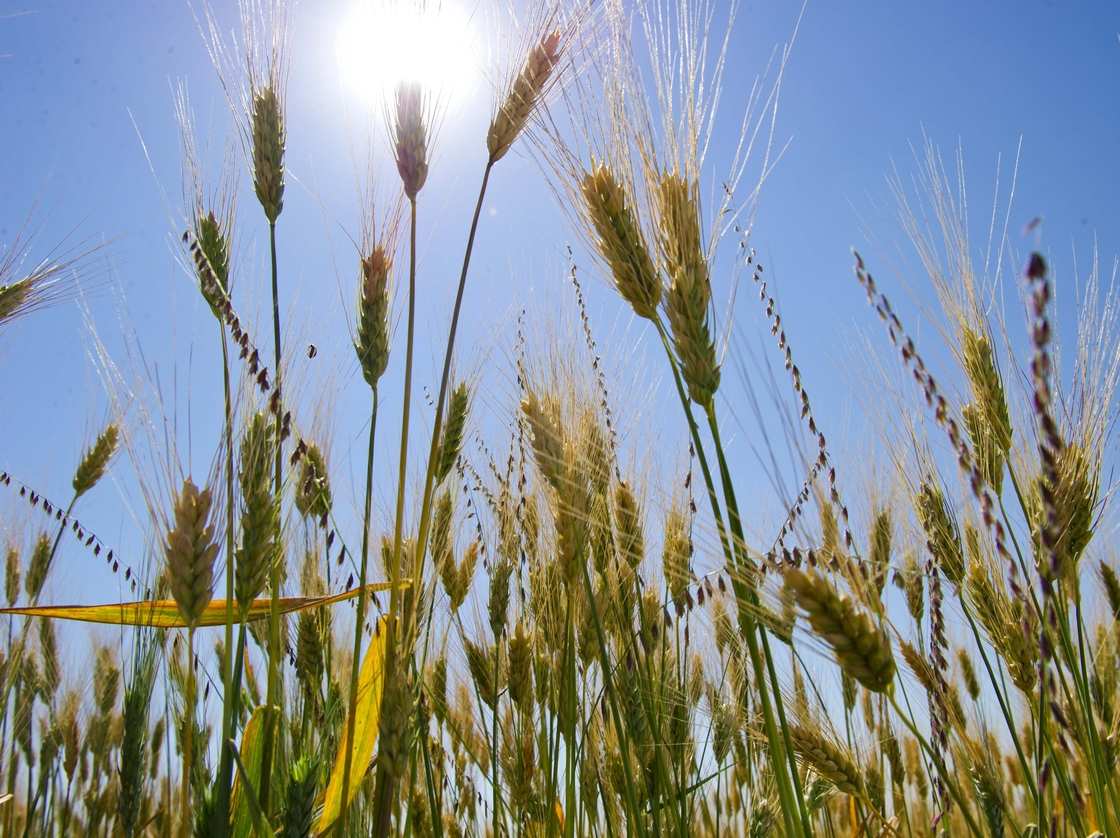
About 40 years ago wheat breeders introduced new varieties of wheat that helped farmers increase their grain yields. But scientists say those varieties aren't linked to the rise in celiac disease.

Karen Bleier/AFP/Getty Images About 40 years ago wheat breeders introduced new varieties of wheat that helped farmers increase their grain yields. But scientists say those varieties aren't linked to the rise in celiac disease. About 40 years ago wheat breeders introduced new varieties of wheat that helped farmers increase their grain yields. But scientists say those varieties aren't linked to the rise in celiac disease.

Karen Bleier/AFP/Getty Images

Wheat has been getting a bad rap lately.

Many folks are experimenting with the gluten-free diet, and a best-selling book called Wheat Belly has helped drive a lot of the interest.

"Wheat is the most destructive thing you could put on your plate, no question," says William Davis, a cardiologist in Milwaukee, Wis., who authored the book.

Davis' drastic views on the ills of wheat were shaped by his own personal experience. Twenty-five years ago, he had Type 2 diabetes, as well as a host of other common ailments including "mind fog, mood swings, joint pains and acid reflux," he says.

But after he stopped eating wheat, he says, his health improved. And he's seen the same kinds of results when his patients go on wheat-free diets.

"You take wheat out of the diet and you literally see lives transformed," Davis says.

Davis' beliefs are way outside the mainstream. Most doctors don't think wheat causes problems for most people. Nonetheless, with a growing number of people claiming they feel better without wheat, Davis says there's something going on here.

His theory is that modern varieties of wheat are to blame. He says the wheat of yesteryear didn't make people sick.

"We know that celiac disease has doubled in the last 20 years," Davis says. And he says we known that humans have probably not changed, "so the more likely culprit is the wheat itself."

It's true that about 40 years ago, breeders introduced new varieties of wheat that helped farmers increase their grain yields. Those varieties, which came out of the Green Revolution, now make up 90 percent of all the wheat that farmers grow around the world.

But the claim that the more productive wheat is somehow making people sick didn't sound right to scientists who work with the crop.

"I never thought that wheat was toxic," says Donald Kasarda, who has studied gluten proteins for more than 40 years as a research chemist for the U.S. Department of Agriculture.

Kasarda says when he saw there was speculation that the rise in celiac disease and gluten sensitivities was linked to breeders increasing the amount of gluten in wheat, he was very skeptical.

"It seemed strange to me," says Kasarda. As far as he knew, gluten levels had remained about the same. And when he dug deeper, combing through the scientific literature, he found no significant differences in gluten levels in wheat from the early part of the 20th century, compared with gluten levels from the latter half of the century.

So, when it comes to an increase of gluten in modern wheat? "As I suspected, I didn't find any evidence that this is true," says Kasarda.

Kasarda presented his research at the International Celiac Disease Symposium this week. And he published his findings in the peer-reviewed Journal of Agricultural and Food Chemistry.

Now, Wheat Belly author Davis believes there are more subtle changes in the wheat plant that are leading to the problems. But there's no scientific agreement on this. And in the medical world, there's a lot of pushback against the idea that modern wheat is toxic to all of us.

"I certainly think that's an overstatement," celiac expert Daniel Leffler told us. Leffler directs research at Beth Israel Deaconess Medical Center and is on the faculty at Harvard Medical School.

"I don't think there's one evil food causing the problem in our society," Leffler says. In fact, he says most people eat wheat with no problem. "There's good evidence that the vast majority of people actually do just fine with wheat."

Leffler says it's true that the prevalence of celiac disease is up. Most experts agree that about 1 percent of the population has this condition, which makes it very vulnerable to even small amounts of gluten, and they say it isn't just due to better diagnosis and awareness.

There's also a growing consensus that another portion of the population does have a nonceliac gluten sensitivity. That means they test negative for celiac disease but have some similar symptoms — like diarrhea, abdominal pain and headaches — after eating foods with gluten.

Leffler says there's likely no single cause leading to the increased prevalence of celiac. And he doesn't agree with the notion that changes to modern wheat could explain what's happening.

"We sort of chafe at these oversimplistic theories that purport to explain an entire rise in a disease," he says.

Leffler says the increase in celiac disease comes at a time when lots of other autoimmune diseases and allergies are on the rise, too. And one theory that might help explain this phenomenon is the so-called hygiene hypothesis.

This is the idea that our environment has become so clean and sterile that our immune systems no longer have to fend off so many bugs and infections, especially when we're young. As a result, our immune systems start to overreact to things that should be harmless, such as wheat or peanuts.

"You can see very quickly how this gets really complicated," Leffler says.

There are many other theories that could help explain gluten intolerances. Some scientists are looking at the changes in gut bacteria. There's also growing evidence that antibiotic use early in life and the timing of introducing babies to wheat and other grains could favor the onset of celiac disease later in life, says Stefano Guandalini, a professor of pediatrics at the University of Chicago and medical director of the university's Celiac Disease Center.

As for why so many people say they feel better on a gluten-free diet, Guandalini says that might have nothing to do with the gluten.

"It could be another protein in wheat," he says. "It could also be that once you remove gluten, you're also removing a number of other carbohydrates that are hard to digest. So you eliminate them and that makes you feel better."

But, he admits, doctors are really just beginning to understand what gluten sensitivity truly is. "It's a moving target," Guandalini says. "The more we learn the less we really know."

Leffler of Beth Israel Deaconess Medical Center agrees that we should stay tuned on this one. But in the meantime, don't think you have to avoid wheat if you enjoy bread and pasta and tolerate them well.


View the original article here

Tuesday, 1 October 2013

Girls who grow up eating PB&Js could be doing their breast health a favor.

Researchers from the Washington University School of Medicine in St. Louis, Dana-Farber Cancer Institute and Harvard Medical School found an association between regularly eating peanut butter and having a lower risk of developing benign breast disease in early adulthood. Benign breast disease is noncancerous, and occurs when there are changes to the breast or an injury or infection leads to lumps in the breast tissue. The research team did not investigate a link between peanut butter and malignant breast lumps or cancer.

Other sources of vegetable fats and proteins -- such as soybeans, beans and lentils -- could also have the same effect, but researchers noted that the data on these particular foods in the study was not as abundant as data on peanut butter.

It's important to note that the study only showed an association between peanut butter consumption and breast disease, and doesn't show that peanut butter can definitively prevent breast disease.

The study, published in the journal Breast Cancer Research and Treatment, included health data on 9,039 U.S. girls ages 9 to 15 who were recruited to the Growing Up Today Study in 1996. They filled out food-frequency questionnaires once a year from their recruitment year until 2001, and then biennially until 2010.

In 2005, researchers also started keeping track of benign breast disease diagnoses among the study participants, who had entered adulthood and were now between ages 18 and 30. Researchers found that 112 of them had developed the condition.

Researchers found that eating peanut butter twice a week during childhood/adolescences was linked with a 39 percent lower risk of developing benign breast disease, and this effect seemed especially strong among girls who had a family history of breast cancer.

Of course, nuts have a wide range of other health benefits, too. To find out more, click here.

Also on HuffPost:

Subscribe window._taboola = window._taboola || [];_taboola.push({mode:'autosized-1r-organic',container:'taboola-autosized-1r-organic'});_taboola.push({mode:'autosized-1r-sc',container:'taboola-autosized-1r-sc'});window._taboola = window._taboola || [];_taboola.push({flush:true});

View the original article here

Sunday, 29 September 2013

By Rachael Rettner, Senior Writer
Published: 09/24/2013 11:15 AM EDT on LiveScience

Exposure to even low levels of arsenic in drinking water and food may increase the risk of developing, and dying from, heart disease, a new study suggests.

In the study, researchers analyzed urine samples from 3,575 American Indians in Arizona, Oklahoma and North and South Dakota, living in regions where arsenic levels in drinking water were "low to moderate," meaning they were above the limit set by the U.S. Environmental Protection Agency, which is 10 micrograms per liter, but below 100 micrograms per liter.

Urine samples were collected between 1989 and 1991, and the participants were divided into four groups based on the concentration of inorganic arsenic in their urine. (There are two types of arsenic, organic and inorganic, inorganic arsenic is thought to be more toxic).

The participants were followed until 2008, and those in the group with the highest urine arsenic concentrations were 32 percent more likely to develop cardiovascular disease, and 65 percent more likely to die from the condition over the nearly 20-year period, compared to the people in the group with the lowest arsenic urine concentrations. [7 Foods You Can Overdose On]

The findings held after the researchers took into account certain risk factors for heart disease, such as smoking and high body mass index. However, the strength of the link declined slightly after the researchers took into account other risk factors: high blood pressure, diabetes and liver disease, suggesting that these factors may explain part of the link between arsenic exposure and cardiovascular disease risk, the researchers said.

While previous studies have linked high levels of arsenic exposure to increased risk of cancer and heart disease, few studies have looked at the effects of low to moderate exposure.

In 2001, the EPA estimated that the drinking water of 13 million Americans had arsenic levels above the limit of 10 micrograms per liter. People can also consume the element through their food, although no limit has been set for food.

Recently, the Food and Drug Administration set a limit for the amount of arsenic in apple juice, but has not done so for food. Concerns have been raised over levels in rice, but after testing, the agency said that levels of arsenic in rice were too low to pose health risks over the short term, although it said more research on the long-term health effects is needed.

"Given the large population exposed, even a modest increased risk of cardiovascular disease due to arsenic could have important public health implications," the researchers wrote in Monday's (Sept. 23) issue of the journal Annals of Internal Medicine. "These findings support the importance of low to moderate arsenic exposure as a cardiovascular risk factor with no apparent threshold," they said.

Because the study involved American Indian populations, who are at an increased risk for diabetes, the findings would be particularly applicable to other groups that also have a high diabetes risk, said study researcher Dr. Ana Navas-Acien, an associate professor of environmental health sciences and epidemiology at Johns Hopkins Bloomberg School of Public Health.

The results are based on a single measurement of urine arsenic levels, which took place at the study's start, so it's not clear if the study participants' levels would have remained the same over time. However, a separate analysis done by the researchers showed that the measurement taken at the study's start was generally consistent with measurements taken at two other points.

It's not clear how arsenic exposure might increase the risk of heart disease, and the study cannot prove that arsenic exposure causes heart disease. Diabetes, high blood pressure and liver disease -- which were more common among those with the highest urine arsenic concentrations -- could play a role.

It could also be that some other factor, related to both arsenic exposure and cardiovascular disease risk, could explain the link, Navas-Acien said. Studies in animals suggest that arsenic exposure increases the risk of developing plaques in the arteries, or arteriosclerosis, which can cause heart disease.

Follow Rachael Rettner @RachaelRettner. Follow LiveScience @livescience, Facebook & Google+. Original article on LiveScience.

Copyright 2013 LiveScience, a TechMediaNetwork company. All rights reserved. This material may not be published, broadcast, rewritten or redistributed. ]]>

View the original article here